Did you know that over 2.3 billion people worldwide are suffering from tooth decay, and most of these dental conditions start with habits formed when they were children. Data suggest that children with visible plaque have a 4.8-fold higher risk of developing dental problems than those who don’t.
One of the earliest stages of dental disease is suffering from gingivitis symptoms. It includes red, swollen, and bleeding gums, which are caused by plaque, tartar, and bacterial buildup on your teeth. Although 44.5% of the total global population is suffering with oral disorders, the prevalence of gingivitis peaks around the age of puberty, with figures ranging 50% to 99% in some populations.
While gingivitis symptoms are common among children, the relief is, at this stage, it is easily reversible with early detection and timely intervention. So, here is a guide to help new parents practice a proper dental care routine with their children.
Gingivitis Symptoms You Should Not Ignore
Children with gingivitis symptoms show some early signs that are easier to detect. As a parent, look out for these early signs of gingivitis in kids.
Gingivitis Symptoms in Gums:
- Color Changes: While healthy gums are typically firm and pale pink in color. Gingivitis symptoms can make the gum go red, dusky red, or dark purple.
- Texture Shape: Healthy gums have a smooth texture along with a firm shape. But in gingivitis, gums become swollen, puffy, or rounded.
- Bleeding: While occasional bleeding is not a worry, consistent bleeding every time your gums are lightly scratched is definitely the beginning of gingivitis.
- Breath/Taste: Children with gingivitis have this persistent bad breath, which comes with a lingering bad taste in their mouth.
- Sensitivity: Under healthy circumstances, your kids might not even notice anything in their gums. However, with gingivitis, teeth may become sensitive to hot or cold food.
- Recession: In Gingivitis, gums begin to pull away from the teeth, making the teeth appear longer.
If you had the question of what gingivitis looks like, this is the answer. Parents must look out for these early signs in their kids and stop this bacteria from further damaging the oral hygiene of kids.
What Causes Gingivitis?
Gingivitis is the first stage of gum disease, which is caused by a sticky, colorless biofilm which is composed of bacteria, mucus, and food debris. This plaque is the root cause of all oral issues and must be cleaned thoroughly every day for healthy, bright smiles.
If this plaque is not removed within a short period, it hardens under the gumline and becomes calculus, also known as Tartar. This hardened matter acts like a protective shield for bacteria and cannot be removed by bare brushing. This is the second stage of gingivitis, which can be treated with professional dental cleaning.
If you are looking for a pediatric dentist for your baby’s first dental visit, Knoxx Pediatrics in Houston, Texas, removes tartar and plaque hidden in small cracks with utmost care.
When toxins produced by bacteria in plaque and tartar irritate the gums for long enough, the body responds with an immune response that leads to swelling and bleeding.
Gingivitis in Kids
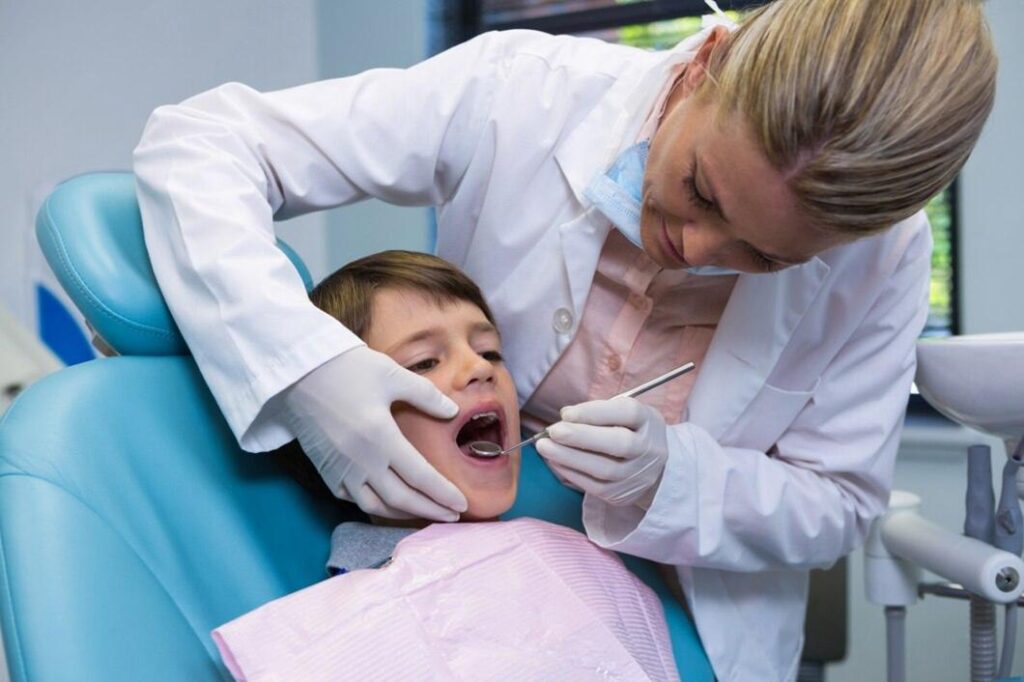
Now that we know, multiple Global research studies on this topic suggest that children and adolescents with underlying health complexities face a high probability of developing gingivitis symptoms.
A French study even reviewed 132 children between the ages of 12 and 18 at a specialized pediatric center and found significant oral health challenges. Barely half of the kids reported brushing twice a day, whereas 44% had gingivitis. This means that 1 in 3 children here had at least one untreated dental cavity.
Now, imagine these numbers being replicated throughout the world. This would certainly make the 2.3 billion people suffering from dental problems’ claim valid. Generally, gingivitis is a condition that develops during puberty or early adulthood years, largely due to hormonal changes. This hormonal imbalance increases the sensitivity of the gums to plaque and then leads to gingivitis first, and later periodontosis.
Complications After Ignoring Gingivitis Symptoms
Gingivitis is treatable, though, if ignored, it can progress to Periodontosis, which is a non-reversible condition where the infection spreads to the bone structure holding teeth in place. This can lead to:
- Abscesses: Painful infections in the gums or jawbone.
- Tooth Loss: Destruction of supporting structures causes teeth to loosen and fall out.
- Trench Mouth (NUG): A severe, painful form of gingivitis involving ulcers and infection.
Periodontosis is a severe gum disease that is linked with heart disease, stroke, respiratory diseases, and cancers. This is why prevention and treatment at the earliest signs of discomfort are necessary for oral hygiene.
Prevention and Treatment of Gingivitis
Gingivitis is highly preventable and reversible if identified at the right time. Any parent can follow the pediatric dental care guidelines for treating gingivitis symptoms.
Home Care Treatment Techniques for Gingivitis
- Efficient Brushing: Brush two times for two minutes daily.
- Change Brush Type: Electric power OR-Toothbrushes are known to help patients remove the plaque that causes gingivitis.
- Frequent Flossing: Flossing one time a day helps eliminate bacteria stuck between your teeth.
- Antimicrobial Rinses: Mouthwashes containing antiseptics can kill bacteria and lessen inflammation.
Professional Dental Treatment
- Scaling: A dentist can scrub away plaque and calculus deposits from the areas above and under the gum line.
- Root Planing: Root surface polishing to inhibit the development of bacteria on the teeth roots.
- Checkups: Visit a dentist at least once a year.
FAQs
What does gingivitis look like in its early stage?
In the early stage of gingivitis, plaque buildup weakens the gumline. Therefore, we get to see red, puffy, or swollen gums.
Can children have gingivitis?
Yes, children have a higher chance of developing gingivitis. In one study, it was revealed that about 44% of children are at risk of having plaque build-up that leads to tartar and gingivitis symptoms.
Is gingivitis reversible?
If gingivitis symptoms are treated early enough, it is absolutely reversible. Because, at the beginning of gingivitis, the plaque has not yet damaged the supporting bone of your teeth.
Do bleeding gums indicate gingivitis?
Yes, if you find blood from the gums regularly, then there is an infection within your gums, which is a sign of gingivitis. However, there are certain rare instances where aggressive brushing may result in bleeding from the gums; nonetheless.
Does gingivitis disappear on its own?
If you neglect your condition, gingivitis is unlikely to improve. The reason is that it occurs due to the constant formation of plaque on your teeth. After converting into tartar, it can only be removed by a dental professional. Otherwise, the problem may worsen and become periodontitis, which may cause tooth and bone loss.
Why choose Knox Pediatric Dentistry for your child’s dental care?
At Knox Pediatric Dentistry, we provide specialized formal care to your child in a fun, relaxed environment. Our board-certified pediatric dentists conveniently provide same-day appointments to busy families through flexible work hours.